
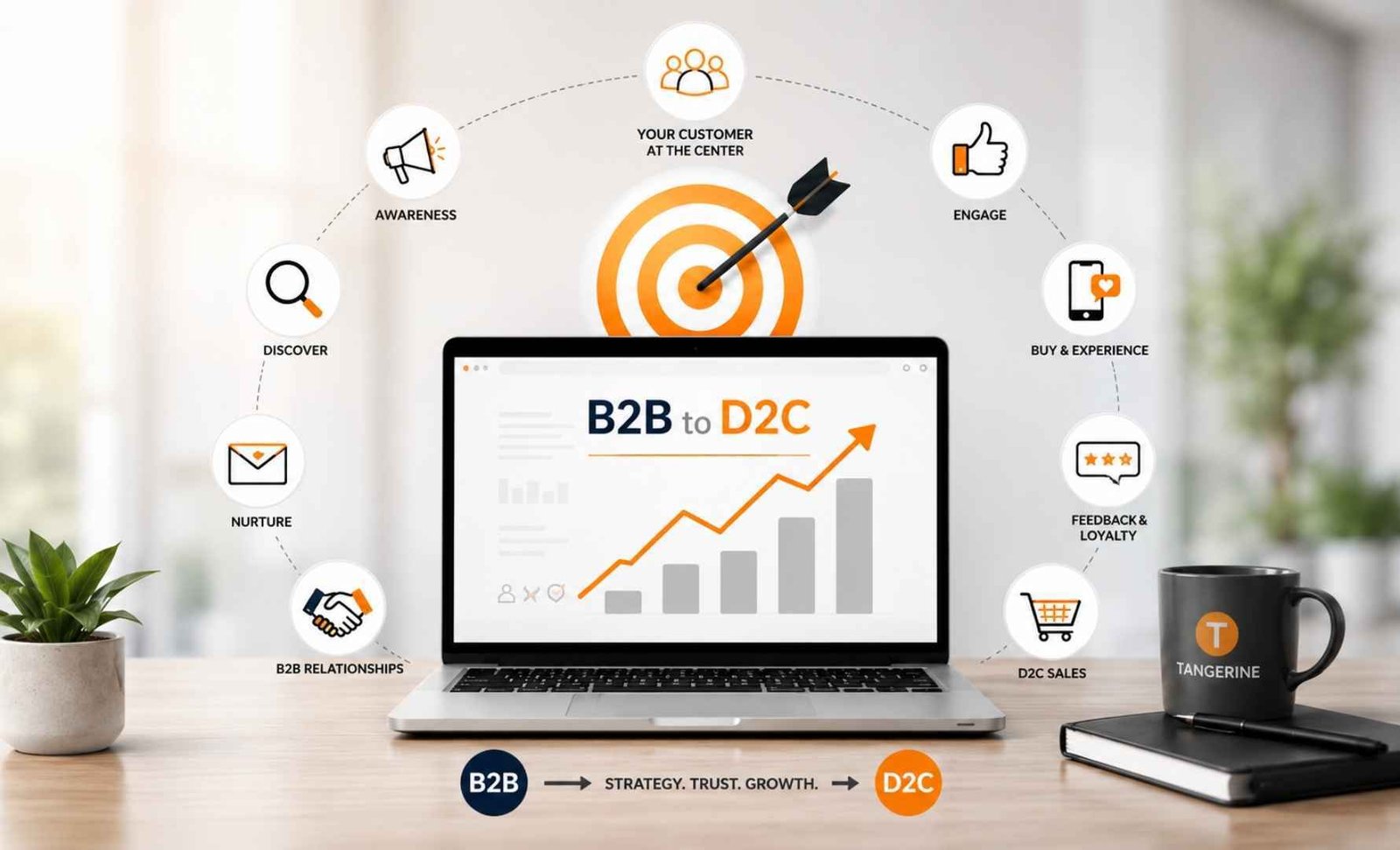
To succeed in the fast-paced digital world of today, a company needs more than just a quality product or service. It requires visibility, credibility, and a robust web presence. For firms in every industry, from B2B to D2C, digital marketing is therefore now a business requirement rather than merely a choice. In a market that is becoming more and more competitive, digital marketing enables firms to connect with the proper audience, create lasting relationships, and remain relevant.
The customer journey now starts online, regardless of whether a business sells directly to customers or to other enterprises. Before making a choice, consumers look, compare, read reviews, check social media, and assess the legitimacy of brands. Because of this, digital marketing is crucial for raising awareness, influencing consumer choices, and enhancing brand reputation throughout all phases.
Why Digital Marketing Matters for Every Brand
Brands may precisely and purposefully contact their consumers with digital marketing. Businesses can target particular client groups and monitor effectiveness in real time by using SEO, paid advertisements, social media, content marketing, email, and reputation management in addition to wide traditional campaigns. As a result, marketing is more effective, quantifiable, and economical.enterprise.
For modern brands, the biggest advantage of digital marketing is adaptability. Campaigns can be optimized quickly based on data, customer behavior, and market trends. This allows brands to respond faster, improve ROI, and stay ahead of competitors who are still relying on outdated methods.
Digital Marketing for B2B Brands
Digital marketing is essential for B2B companies to generate leads, establish trust, and cultivate long-term relationships. A good online presence is frequently the first step in gaining the attention of B2B buyers, who typically conduct thorough research before communicating with a sales team. B2B companies may educate prospects and confidently advance them through the funnel with the use of content marketing, SEO, webinars, LinkedIn, and email nurturing.
Because B2B sales cycles are frequently longer and more intricate, brands want constant visibility and authority. Businesses can exchange knowledge, present case studies, respond to consumer inquiries, and create credibility through digital marketing in a way that gradually increases trust. This is particularly helpful in sectors where purchasing decisions are influenced by expertise and trust.
Digital Marketing for D2C Brands
Digital marketing is the driving force behind discovery, interaction, and repeat business for direct-to-consumer firms. These companies must independently generate demand and establish a distinctive brand identity in congested internet markets since they sell directly to customers. D2C companies use social media, search, influencer marketing, performance advertisements, and email automation to draw in and retain consumers.
Direct consumer feedback, data-driven insights, and the capacity to customize communication are additional advantages for D2C brands. In addition to strengthening client loyalty, this helps them enhance the customer experience. Digital marketing allows direct-to-consumer (D2C) firms to expand more quickly and intelligently in a market where attention spans are short and competition is fierce.
Why It Is the Need of the Hour
It’s easy to understand why digital marketing is so important nowadays: consumer behavior has evolved. Consumers are no longer just dependent on offline advice or ads. Before making a purchase, people conduct online research, read reviews, weigh their options, and assess a brand’s communication style. A brand runs the risk of being completely ignored if it is not reputable and visible online.
Online reputation management becomes crucial in this situation. Strong digital strategies influence people’s perceptions of the brand in addition to increasing traffic. The lesson is particularly evident for a business like Tangerine Online Reputation Management: visibility without trust is insufficient, and trust without visibility is difficult to establish. To thrive in the digital era, brands require both.